Your AI agent didn't fail because the model is bad. It failed because your infrastructure is broken. MindStudio's analysis of 591 production agent incidents reveals a truth most teams refuse to accept: 88% of AI agent failures have nothing to do with the model.
The Problem
Everyone's chasing better models. Bigger context windows. More parameters. Higher benchmark scores. But here's what the data actually shows:
- 31.6% of agent failures come from context blindness — the agent loses track of what it's already done, makes conflicting decisions, and spirals.
- 24.9% fail from silent degradation — things break slowly, nobody notices, and by the time you catch it, the damage is done.
- The remaining ~32% are split across broken tool integrations, misconfigured permissions, and network failures.
Only 12% of failures trace back to the model itself. Bad reasoning, hallucinated outputs, wrong answers — these are the minority. The majority of your agent's problems live in the plumbing.
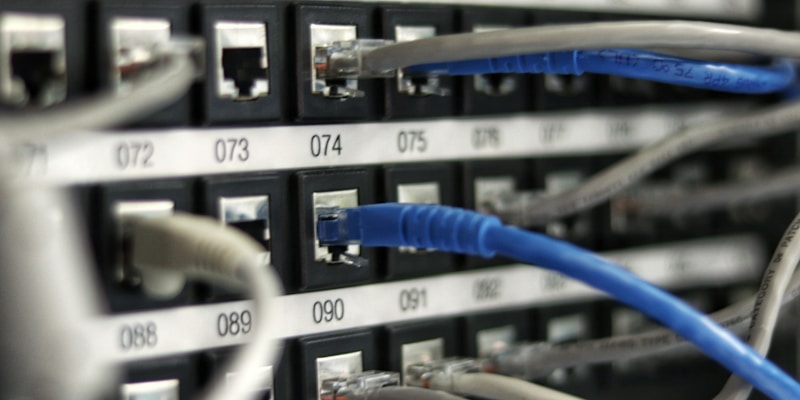
Think of it like a self-driving car. The "AI brain" might be perfect, but if the steering cable is loose and the GPS drops signal every few minutes, you're still crashing. The model is the brain. Your infrastructure is the steering, brakes, and suspension.
The Solution
The fix isn't a better model. It's infrastructure hardening — building systems that catch failures before they cascade. Here's what that actually looks like:
Context isolation means giving each agent task its own memory sandbox. Instead of one sprawling context window that grows until the agent forgets what it started doing, you break work into discrete chunks. Each chunk carries only what it needs. This alone eliminates most context blindness.
Silent degradation monitors are watchdogs that track agent behavior over time. Not just "did it crash?" but "is it getting worse?" Token usage creeping up? Response quality drifting down? Tool calls taking longer? These are early warnings, and catching them early is the difference between a 2-minute fix and a 2-day incident.
Circuit breakers — borrowed from distributed systems engineering — stop agents before they cause real damage. If an agent makes 3 consecutive errors, or if its token consumption spikes 5× above baseline, the circuit breaker trips. The agent pauses. A human reviews. Production stays safe.

Tool health checks run before every agent action. Can the agent still reach the database? Is the API responding? Is the file system writable? If any answer is no, the agent stops — it doesn't try to "work around it" and corrupt your data.
The Numbers
Here's what the 591-incident analysis actually found:
- 88% of failures are infrastructure-related — context blindness (31.6%), silent degradation (24.9%), tool failures (~18%), permissions/config errors (~13%)
- Only 12% are model-level failures — bad reasoning, hallucinations, instruction misinterpretation
- Context blindness is the #1 killer — agents that lose track of their own state make exponentially worse decisions
- Silent degradation is the stealth killer — it's responsible for the most expensive incidents because nobody catches it until damage accumulates
- Caveat: This analysis is based on MindStudio's ecosystem. Your mileage will vary depending on your stack, your agents, and your team's operational maturity. The 88% number isn't a law of physics — it's a strong signal that infrastructure deserves way more attention than it gets.
The Impact
Here's the business case. If you're spending $100K on AI agent implementation:
- $88K of your failure budget is going to infrastructure problems you can actually fix
- $12K is going to model problems you can't directly control (you pick a model, you live with its reasoning quality)
Fixing infrastructure is cheaper and faster than upgrading models. Moving from GPT-5.5 to GPT-6 might reduce model failures by 30%. Implementing context isolation and circuit breakers can reduce infrastructure failures by 60-80%. And infrastructure fixes are one-time engineering work — model upgrades are recurring licensing costs.
For enterprises deploying AI agents at scale, the math is clear: invest in the plumbing first, the model second. Every dollar spent on agent infrastructure hardening returns more reliability than a dollar spent on a more expensive model.
The companies winning with AI agents right now aren't the ones with the best models. They're the ones with the best guardrails. Build accordingly.